A Layered, Facility-by-Facility Guide to Detection, Throughput, and Technology Selection
Author: Shaun Ripani, Vice President, Point Security, Inc.
A Point Security white paper on checkpoint optimization across eight facility categories
Executive Summary
An optimized security checkpoint detects the threats a specific facility actually faces, at the speed its visitors, staff, mail, or freight must move, using the staff and floor space the facility actually has. No single machine does that. Optimization comes from assembling the right layers — deterrence, people screening, belongings screening, AI-assisted image analysis, secondary screening, and targeted inspection — and sizing each layer to the facility’s threat profile.
Point Security, Inc., a certified small business with roughly three decades in security screening sales, rental, and service, designs checkpoints around two of aviation security’s leading manufacturers, Smiths Detection and CEIA, and a curated group of specialist technology partners: Viken Detection, LINEV Systems, Rohde & Schwarz, Liberty Defense, NeuralGuard, ENSCO, Ranger Security Detectors, Thermo Scientific, and LiveView Technologies (LVT).
This white paper organizes checkpoint design into eight facility categories, each defined by its primary area of concern:
For each category, the paper identifies the main areas of concern, the screening layers that address them, and the specific equipment Point Security recommends, along with practical layout and workflow guidance that keeps detection high and lines short.
What does it mean to optimize a security checkpoint?
Optimizing a security checkpoint means achieving the required detection performance at the lowest practical cost in time, staff, space, and visitor friction. Every checkpoint balances five variables:
The most common mistake is optimizing one variable at the expense of the others: buying the most sensitive detector available and then watching queues form, or choosing the fastest system and missing the threats that matter. A layered design avoids that trade-off by giving each layer one clear job.
What are the layers of a modern security checkpoint?
A modern security checkpoint is built from up to seven complementary layers. Not every facility needs all seven; optimization means selecting the layers that match the facility’s threat profile.
|
Screening layer |
What it does |
Representative technology |
|
1. Deterrence and surveillance |
Discourages attempts, monitors approaches, parking areas, and perimeters, and records incidents |
LVT camera systems and mobile security units |
|
2. Primary people screening |
Screens every person for weapons and prohibited items in a single pass |
CEIA walk-through metal detectors and OPENGATE; body scanners from CEIA, Rohde & Schwarz, Liberty Defense, and LINEV Systems |
|
3. Belongings screening |
Images bags, parcels, mail, and freight |
Smiths Detection X-ray and CT systems |
|
4. AI-assisted image analysis |
Automatically highlights weapons in X-ray images so detection does not depend on vigilance alone |
NeuralGuard EyeFox; Smiths Detection iCMORE Weapons |
|
5. Secondary screening |
Pinpoints and resolves alarms quickly without a full pat-down |
CEIA PD240 and PD140 handheld metal detectors |
|
6. Targeted inspection |
Examines suspicious items, residues, walls, furniture, and property |
Viken Detection handheld X-ray; Smiths Detection IONSCAN 600; narcotics and CBRNe detectors |
|
7. Vehicle, cargo, and presence inspection |
Screens vehicles, containers, and rail cars and detects hidden people |
Smiths Detection HCV systems; Viken Detection Osprey and Harrier; ENSCO MicroSearch |
The layers reinforce each other. A walk-through detector localizes an alarm and a handheld wand resolves it. An X-ray system images a bag, AI flags a pistol inside it, and a trace detector or handheld X-ray clears a suspicious item without opening it by hand. Designed together, the layers let a small team screen to a high standard.
Which checkpoint design fits your facility?
The right design starts with the facility category. Point Security groups checkpoint designs into eight categories, each named for the operational problem it solves rather than a single building type, because facilities with similar threat profiles share the same design principles.
|
Facility category |
Examples |
Primary concern |
Core layers |
|
1. Government & Public-Access Buildings |
Courthouses; federal, state, and municipal buildings; city halls; state capitols |
Weapons and recording devices entering public buildings |
X-ray, walk-through metal detection with phone detection, AI, handheld secondary |
|
2. High-Volume Open-Access Venues |
K-12 schools; college campuses; stadiums and arenas; hospitals |
Fast weapons screening of crowds without divesting |
Open-gate or walk-through screening, compact X-ray, AI, handheld secondary |
|
3. Correctional & Detention Facilities |
Prisons; county jails; detention and juvenile centers |
Cell phones, narcotics, and weapons, including internal concealment |
High-sensitivity metal detection, cell phone detection, body scanners, narcotics detection |
|
4. Critical Infrastructure & High-Security Sites |
Airports; data centers; nuclear and energy plants; defense and research sites |
Metallic and non-metallic threats, explosives, CBRNe |
CT X-ray, body scanners, CBRNe detection, handheld X-ray |
|
5. Mailrooms & Inbound Parcel Screening |
Government and corporate mailrooms; court and correctional mail centers |
IEDs, powders, biological agents, drug-laced mail |
Mailroom X-ray, biological and trace detection, mail scanners |
|
6. Air Cargo & Palletized Freight |
Certified cargo screening facilities; freight forwarders; cargo terminals |
Regulated screening of pallets and consolidated freight |
Large-tunnel dual-view X-ray, trace and biological detection |
|
7. Mobile, Temporary & Event Screening |
Special events; high-profile trials; emergency operations; surge capacity |
Full screening capability without permanent installation |
Portable people screening, vehicle-mounted X-ray, mobile cameras |
|
8. Ports, Borders & Vehicle Inspection |
Seaports; land ports of entry; rail crossings; facility vehicle gates |
Threats and contraband in trucks, containers, rail cars, and vehicles |
High-energy cargo X-ray, under-vehicle imaging, human presence detection |
Which technologies are used across multiple facility types?
Several technologies appear in nearly every Point Security checkpoint design. They are described once here and referenced in each facility section that follows.
How does AI improve X-ray screening?
AI-assisted image analysis automatically detects and highlights threats in X-ray images, so detection no longer depends solely on an operator’s attention late in a long shift. Point Security integrates two AI platforms and matches the right one to each facility.
NeuralGuard EyeFox. EyeFox applies artificial intelligence and computer vision to X-ray images and flags firearms, knives, hand grenades, and other threat items in sub-second time. NeuralGuard designs its detection to retrofit existing X-ray equipment without new hardware or firmware, and lists compatibility with Smiths Detection, Rapiscan, Astrophysics, Analogic, Leidos, SureScan, and other systems — a practical way to add AI to an installed, mixed-brand fleet. [1][2]
Smiths Detection iCMORE Weapons. iCMORE Weapons is Smiths Detection’s deep-learning algorithm for automatic detection of guns, gun parts, ammunition, and grenades. It integrates with Smiths Detection X-ray systems as a software upgrade — for most scanners no extra hardware is required — and processes images in under a second, reducing false alarms and operator fatigue. iCMORE is available for both low-energy baggage screening and high-energy cargo and vehicle screening. [3]
How to choose. EyeFox suits mixed-brand fleets and retrofits; iCMORE is native to the Smiths Detection platform and extends into cargo and vehicle inspection. In either case the operator remains the decision-maker. AI directs attention to the threat; it does not replace the trained screener.
Which handheld metal detectors resolve alarms fastest?
The CEIA PD240 and PD140E / PD140N handheld detectors are Point Security’s standard secondary-screening tools. Both are fully digital and calibration-free, with uniform detection of magnetic and non-magnetic metals. The PD140 series is compliant with NIJ 0602.02, and the PD240 adds a wider 240 mm detection area for faster scans and high immunity to floor rebar, so officers can screen down to foot level without losing sensitivity. [4][5][6]
Paired with a multi-zone walk-through detector, a handheld wand turns an alarm into a brief, targeted check rather than a full pat-down: the gate localizes the alarm to a zone, and the wand confirms exactly what and where.
When is handheld X-ray the right tool?
Handheld X-ray lets an officer see inside an object without opening, dismantling, or touching it — an unattended bag in a lobby, a hollow wall, furniture in a cell, a vehicle door panel, or a package that cannot be run through a conveyor.
Viken Detection Nighthawk. A rugged handheld X-ray system available in two configurations: HBI, a compact backscatter imager for vehicles and containers, and BTX, which combines backscatter and transmission imaging with an optional 140 kV X-ray tube. Both support optional lead identification (PbID) through X-ray fluorescence. [7]
Viken Detection Raven. A smart handheld imager that combines backscatter and transmission imaging with an 85-degree field of view, AI tools including automatic gun identification and material discrimination, a 7-inch high-brightness display, and hot-swappable batteries that run up to eight hours. At roughly 11.5 to 12 pounds, it is built for work in confined spaces. [8]
Point Security matches the handheld X-ray to the mission: suspicious-item inspection in public buildings, contraband searches in corrections, and suspicious-package and IED screening at high-security sites.
What does trace detection add?
Trace detection identifies explosives and narcotics from microscopic residues collected on a swab. The Smiths Detection IONSCAN 600 is a portable ion mobility spectrometry (IMS) trace detector that identifies military, commercial, and homemade explosives as well as illegal narcotics — including synthetic opioids such as fentanyl and carfentanyl — with analysis in roughly 8 to 12 seconds. Its non-radioactive IMS source requires no nuclear regulatory licensing, so it can be moved freely between locations. [9]
IONSCAN 600 appears in five of the eight designs in this paper: secondary screening in public buildings, narcotics detection in corrections, CBRNe support at high-security sites, and additional screening in mailrooms and air cargo facilities.
Why include camera systems in a screening plan?
A checkpoint begins before the front door. LVT camera systems and mobile surveillance units are self-powered, rapidly deployable units that stream live video and store recordings in the cloud. They combine pan-tilt-zoom and thermal cameras with AI-powered detection and active deterrence — strobes, floodlights, and speakers — and typically become operational within minutes of arrival, with no hardwired infrastructure required. [10]
Point Security includes LVT in six of the eight designs to monitor approaches, parking areas, perimeters, and queues; to deter attempts before they reach the checkpoint; and to document incidents.
1. Government & Public-Access Buildings
Examples: courthouses and judicial centers · federal, state, and municipal buildings · city halls and state capitols · public-service and licensing centers
What are the main security concerns at government and public-access buildings?
Government buildings screen a constant, mixed flow of visitors, attorneys, employees, contractors, and law enforcement through a limited number of entrances — often during emotionally charged proceedings — with zero tolerance for weapons reaching secure areas. The key concerns are:
What checkpoint equipment does Point Security recommend for government buildings?
|
Screening layer |
Recommended equipment |
Concern addressed |
|
Baggage X-ray |
Smiths Detection SDX 6040 (single-view) or HI-SCAN 6040 DV (dual-view) |
Weapons and prohibited items in bags, briefcases, and parcels |
|
Walk-through metal detection |
CEIA SMD600 Plus-MI2 or PMD2 Plus |
High-throughput weapons screening; cell phone detection with the SMD600 Plus-MI2 |
|
AI weapons detection |
NeuralGuard EyeFox or Smiths Detection iCMORE Weapons |
Automatic flagging of firearms and knives; operator fatigue |
|
Secondary screening |
CEIA PD240 or PD140E / PD140N; Smiths Detection IONSCAN 600 |
Alarm resolution; explosives and narcotics trace checks |
|
Suspicious item inspection |
Viken Detection Nighthawk or Raven handheld X-ray |
Unattended bags and suspicious packages |
|
Surveillance and deterrence |
LVT camera systems |
Approaches, entrances, and parking areas |
How do these layers work together?
Baggage X-ray. The Smiths Detection SDX 6040 is a compact, mobile X-ray system with a 160 kV generator, a 620 × 420 mm tunnel, and a slim 80 cm footprint on large casters, built for high-traffic public buildings. When bags are densely packed, the HI-SCAN 6040 DV captures contents from two perspectives at once, so operators rarely have to ask a visitor to repack and rescan. [11][12]
Walk-through metal detection. The CEIA SMD600 Plus-MI2 combines an NIJ 0601.02-compliant walk-through metal detector with CEIA’s magnetostatic sensor for cell phone and smartphone detection, signaling weapons and phones with distinct alerts in a single pass — ideal for courts that restrict recording devices. The CEIA PMD2 Plus prioritizes throughput and pinpoint accuracy, localizing alarms across 60 zones with Met-Identity technology. [13][14][15]
AI, secondary screening, and inspection. AI weapons detection keeps X-ray review consistent throughout the day; CEIA handheld detectors resolve walk-through alarms; IONSCAN 600 adds trace screening for explosives and narcotics; and Viken handheld X-ray lets officers inspect a suspicious item in place without opening it.
For a deeper treatment of courthouse design, see Point Security’s companion white paper, How Courthouses Achieve Airport-Grade Security Screening. [16]
How do you optimize a government building checkpoint?
2. High-Volume Open-Access Venues
Examples: K-12 schools and college campuses · stadiums, arenas, and concert venues · hospitals, emergency departments, and behavioral health units
What are the main security concerns at schools, venues, and hospitals?
These facilities must screen large numbers of people in short windows — the morning bell, gates opening before a game, a shift change, or a busy emergency department — while keeping the environment welcoming. Their key concerns are:
What checkpoint equipment does Point Security recommend for schools, venues, and hospitals?
|
Screening layer |
Recommended equipment |
Concern addressed |
|
People screening |
CEIA OPENGATE or PMD2 Plus |
High-throughput weapons screening; no divesting of bags with OPENGATE |
|
Portable X-ray |
Smiths Detection SDX 6040 or HI-SCAN 5030C |
Bags, backpacks, and deliveries in a compact footprint |
|
AI weapons detection |
NeuralGuard EyeFox or Smiths Detection iCMORE Weapons |
Automatic firearm and knife detection in X-ray images |
|
Secondary screening |
CEIA PD240 or PD140E / PD140N |
Fast, discreet alarm resolution |
|
Surveillance and deterrence |
LVT camera systems |
Parking lots, entrances, and crowd areas |
How do these layers work together?
CEIA OPENGATE. OPENGATE is a weapons detection system built from two freestanding pillars with no crossbar and no mechanical or electrical connection between them. It detects multi-caliber weapons and IEDs while people keep their bags, backpacks, and purses — no divesting — with near-zero nuisance alarms and an integrated transit counter. At about 25 pounds, with less than a minute of setup and battery or wall power, it moves easily between entrances and events. [17]
CEIA PMD2 Plus. Where a traditional arch is preferred — a permanent school entrance or a hospital emergency department, for example — the PMD2 Plus delivers high discrimination of non-threat items and pinpoints alarms across 60 zones to keep lines moving. [14]
Portable X-ray. The SDX 6040 and the compact HI-SCAN 5030C screen bags that need a closer look. The HI-SCAN 5030C has a 532 × 328 mm tunnel, desktop or wheeled mobile versions, and shock absorbers that eliminate recalibration after a move; Smiths Detection positions it for building entrances at schools, event venues, stadiums, courthouses, and correctional facilities. [18][11]
AI, secondary screening, and surveillance. AI weapons detection supports less-experienced or part-time screeners; CEIA handheld detectors resolve alarms discreetly; and LVT units watch the parking lots and approaches where many incidents begin.
How do you optimize a school, venue, or hospital checkpoint?
3. Correctional & Detention Facilities
Examples: state and federal prisons · county and municipal jails · detention and juvenile facilities · intake, booking, and visitation centers
What are the main security concerns in correctional facilities?
Correctional screening is contraband interdiction. The threat is not only weapons at the front entrance; it is cell phones, drugs, and weapons that move in through staff, visitors, vendors, returning inmates, mail, and vehicles — often concealed in body cavities or ingested. The key concerns are:
What checkpoint equipment does Point Security recommend for correctional facilities?
|
Screening layer |
Recommended equipment |
Concern addressed |
|
Metal detection |
CEIA SMD601 Plus |
Highest-sensitivity metal-only detection where space is limited |
|
Cell phone detection |
CEIA MSD |
Phones and ferrous contraband, including in body cavities |
|
Body scanners |
LINEV Systems CLEARPASS or SENTINUS; Ranger Security Detectors B.O.S.S. |
Internally concealed contraband; metal in body cavities |
|
Narcotics detection |
Viken Detection FOXHOUND; Smiths Detection IONSCAN 600 |
Drugs from vapor, trace, and bulk samples, including fentanyl |
|
Handheld X-ray (contraband detection) |
Viken Detection Nighthawk or Raven |
Contraband in property, furniture, walls, and vehicles |
|
Surveillance and deterrence |
LVT camera systems |
Perimeters, yards, parking, and visitor areas |
How do these layers work together?
CEIA SMD601 Plus. CEIA describes the SMD601 Plus as its most sensitive walk-through metal detector, fully compliant with NIJ 0601.02 and NIJ 0601.03, with 20 vertical localization zones for finding small metal items once considered undetectable. Its compact frame suits tight entry points, and its 0.2-second reset time keeps staff and visitor lines moving. It is the right choice when the requirement is metal only and space is limited. [20]
CEIA MSD. The MSD is a passive magnetostatic detector that finds cell phones and other ferrous contraband concealed on the person or in body cavities — including smartphones, key-fob phones, and radio transceivers — across five zones with 360-degree coverage. Because it emits no signal, it is safe for people with pacemakers and medical implants. The portable 21-pound column runs about 24 hours on battery and screens roughly 60 people per minute in uninterrupted flow. [19]
LINEV Systems CLEARPASS and SENTINUS. These ultra-low-dose transmission X-ray body scanners reveal what metal detectors cannot: internally concealed narcotics, weapons, electronics, and non-metallic objects. Both capture a full-body image with about 300 milliseconds of stillness, return results in under a second, screen up to 500 people per hour, include AI-assisted threat highlighting, and provide an ADA-compliant, wheelchair-accessible inspection area. CLEARPASS complies with ANSI/HPS N43.17-2009 radiation safety requirements, and SENTINUS is engineered for frequent screening of inmates and staff. [21][22]
Ranger Security Detectors B.O.S.S. The Body Orifice Security Scanner is a non-contact scanning chair that detects small weapons and metal contraband concealed in oral, nasal, abdominal, rectal, and vaginal cavities and in the shin area, with adjustable sensitivity and audio and LED alarms. [23]
Narcotics detection. The Viken Detection FOXHOUND is an ion mobility spectrometry narcotics analyzer that works in vapor, trace, and bulk-sampling modes and detects illicit drugs from trace amounts to visible particles with minimal officer contact — well suited to mailroom and facility screening. IONSCAN 600 adds trace detection of narcotics, including fentanyl and carfentanyl. [24][7][9]
Handheld X-ray. Nighthawk and Raven let officers search property, mattresses, furniture, walls, and vehicles for hidden phones, drugs, and weapons without dismantling them.
How do you optimize a correctional checkpoint?
4. Critical Infrastructure & High-Security Sites
Examples: airports and aviation facilities · data centers · nuclear and energy generation plants · defense, federal, and research installations
What are the main security concerns at critical infrastructure sites?
High-security sites face the broadest threat spectrum: metallic and non-metallic weapons, explosives, insider threats, and chemical, biological, radiological, nuclear, and explosive (CBRNe) hazards. Many operate under regulatory or contractual security requirements, and a screening failure can have consequences far beyond the site. The key concerns are:
What checkpoint equipment does Point Security recommend for high-security sites?
|
Screening layer |
Recommended equipment |
Concern addressed |
|
Advanced X-ray |
Smiths Detection HI-SCAN 6040 CTiX (CT) or HI-SCAN 6040 DV (dual-view) |
3D bag inspection; automated explosives detection |
|
Body scanners (millimeter wave and beyond) |
CEIA JANUS; Rohde & Schwarz QPS201 or QPS Walk2000; Liberty Defense HEXWAVE |
Metallic and non-metallic threats on the body |
|
CBRNe detection |
Smiths Detection LCD 4 / LCD 4 XID and IONSCAN 600; Thermo Scientific RadEye G20-10 |
Chemical agents, TICs, explosives, narcotics, and radiation |
|
Handheld X-ray (suspicious package / IED) |
Viken Detection Nighthawk or Raven |
Suspicious packages and IED assessment |
|
Surveillance and deterrence |
LVT camera systems |
Perimeters, gates, and remote assets |
How do these layers work together?
Smiths Detection HI-SCAN 6040 CTiX. This computed tomography system creates high-quality 3D images of bags in real time. It is ECAC EDS CB C3 approved, TSA APSS v6.2 Level 2 certified, and qualified on TSA’s Checkpoint Property Screening System Qualified Products List, and it lets travelers or employees leave electronics, liquids, and gels in their bags. A compact Model S version is 20 cm narrower for space-constrained checkpoints, and iCMORE can add automated weapons detection. [25]
Smiths Detection HI-SCAN 6040 DV. Where CT is not required, the dual-view 6040 DV combines proven explosives-detection algorithms with optional AI weapons detection and centralized management through Checkpoint.Evoplus. [12]
Body scanners. Point Security offers four body-scanning options, each designed to find threats that metal detectors cannot:
CBRNe detection. The Smiths Detection LCD 4 is a wearable chemical-warfare-agent identifier and toxic industrial chemical (TIC) detector weighing 0.58 kg; Smiths Detection reports it is the most widely deployed chemical agent detector in the world. The XID extension adds detection of explosives, narcotics (including fentanyls), and Novichok agents. IONSCAN 600 provides explosives trace detection, and the Thermo Scientific RadEye G20-10 measures X-ray and gamma dose rate from 17 keV to 3 MeV for radiological screening and verification. [31][9][32]
Handheld X-ray. Nighthawk and Raven allow suspicious packages and potential IEDs to be imaged where they sit, without being opened or moved.
How do you optimize a high-security checkpoint?
5. Mailrooms & Inbound Parcel Screening
Examples: government and corporate mailrooms · court and correctional mail centers · executive and legislative offices · campus and hospital mail services
What are the main security concerns in a mailroom?
Mail and parcels reach the inside of a building without passing through the front-door checkpoint. That makes the mailroom a checkpoint in its own right, with its own threats:
What mail screening equipment does Point Security recommend?
|
Screening layer |
Recommended equipment |
Concern addressed |
|
X-ray |
Smiths Detection HI-SCAN 7555 DV or SDX 100100 (single- or dual-view; high- or low-conveyor) |
Letters, trays, and parcels up to large boxes |
|
Biological detection |
Smiths Detection BioFlash; BioFlash MailGuard System |
Biothreat agents in mail |
|
Mail scanning |
CEIA EMIS-MAIL |
Metallic IED components in letters and flats |
|
Trace detection |
Smiths Detection IONSCAN 600 |
Explosives and narcotics residues |
|
Handheld X-ray |
Viken Detection Nighthawk or Raven |
Suspicious items that cannot be conveyed or opened |
How do these layers work together?
X-ray. The HI-SCAN 7555 DV is a dual-view system with a 755 × 555 mm tunnel, ECAC EDS CB C1 approval, optional iCMORE weapons detection, and Checkpoint.Evoplus connectivity; Smiths Detection positions it for mailroom and parcel screening as well as government facilities and critical infrastructure. For larger parcels and higher volumes, the SDX 100100 family offers a 100 × 100 cm tunnel in single- and dual-view versions, with high- or low-conveyor configurations to fit the loading area. [33][34]
BioFlash and MailGuard. The Smiths Detection BioFlash identifies biological threats — including anthrax, ricin, botulinum toxin, plague, tularemia, and smallpox — in about three minutes using CANARY cell-based biosensor technology, with PCR levels of sensitivity and specificity. The BioFlash MailGuard System packages the BioFlash with a downdraft booth, mail jogger, and compact refrigerator; air drawn from inside the booth as mail is handled feeds the identifier, with results in about two minutes. [35][36]
CEIA EMIS-MAIL. EMIS-MAIL automatically identifies detonators, batteries, trigger circuits, and other metallic IED components in letters and parcels up to 18 inches wide and 3 inches thick, while discriminating against staples and paper clips. It runs up to 12 hours on rechargeable batteries and requires no calibration or periodic maintenance. [37]
Trace detection and handheld X-ray. IONSCAN 600 swabs suspicious envelopes and packages for explosives and narcotics, and Viken handheld X-ray images items that are too large, fragile, or suspicious to move.
How do you optimize a mailroom screening operation?
6. Air Cargo & Palletized Freight
Examples: certified cargo screening facilities · freight forwarders and shippers · airline and airport cargo terminals · distribution and logistics centers
What are the main security concerns in air cargo screening?
Under the 9/11 Act, TSA requires that 100 percent of cargo transported on passenger aircraft be screened at a level commensurate with checked baggage, and it maintains the Air Cargo Screening Technology List (ACSTL) of approved and qualified screening equipment. Through the Certified Cargo Screening Program, shippers, warehouses, and logistics providers can screen cargo before it reaches the airport. [38] The key concerns are:
What air cargo screening equipment does Point Security recommend?
|
Screening layer |
Recommended equipment |
Concern addressed |
|
Pallet X-ray |
Smiths Detection HI-SCAN 145180-2is pro or HI-SCAN 180180-2is pro |
Dual-view imaging of pallets and bulky freight |
|
Trace detection |
Smiths Detection IONSCAN 600 |
Explosives trace detection for alarm resolution and smaller shipments |
|
Biological detection |
Smiths Detection BioFlash |
Biothreat agents |
How do these layers work together?
HI-SCAN 145180-2is pro. Purpose-built for air cargo, the 145180-2is pro accepts objects up to 1450 × 1800 mm and uses two 200 kV generators — one positioned beneath the conveyor to improve penetration, image clarity, and maintenance access — in a particularly compact footprint. [39]
HI-SCAN 180180-2is pro. For the largest shipments, the dual-view 180180-2is pro screens goods on the largest TSA-approved pallet size and is qualified on TSA’s ACSTL. Its optimized design is 25 percent smaller than earlier versions. [40]
Break-bulk and oversized pieces. The dual-view SDX 100100 DV HC, with a 100 × 100 cm tunnel, was added to TSA’s ACSTL in December 2025 for use by regulated air cargo operators. [41]
IONSCAN 600 and BioFlash. IONSCAN 600 was the first explosives trace detection system to be “Approved” on TSA’s ACSTL under its updated requirements and supports alarm resolution and screening of smaller shipments; BioFlash adds biothreat identification where required. [42][35]
How do you optimize an air cargo screening operation?
7. Mobile, Temporary & Event Screening
Examples: special events, festivals, and parades · high-profile trials and dignitary visits · emergency and disaster operations · surge capacity, rental, and lease programs
What are the main concerns for mobile and temporary screening?
Some screening needs are temporary, seasonal, or location-dependent. A mobile checkpoint must deliver the same detection as a fixed one while arriving on a vehicle, setting up quickly, running on its own power, and leaving no permanent footprint. The key concerns are:
What mobile screening equipment does Point Security recommend?
|
Screening layer |
Recommended equipment |
Concern addressed |
|
People screening |
CEIA OPENGATE or PMD2 Plus |
Portable, high-throughput weapons screening |
|
Mobile baggage and parcel X-ray |
Smiths Detection ScanVan 100100 PRO, ScanMobile 130100, or SDX 6040 with mobile upgrades; Viken Detection Osprey Mobile |
Vehicle-mounted and portable X-ray for bags, deliveries, and vehicles |
|
Human presence detection |
ENSCO MicroSearch G4.0 Wired or Wireless |
People hidden in vehicles or containers |
|
Surveillance and deterrence |
LVT camera systems and mobile security unit trailers |
Temporary perimeters, parking, and queues |
How do these layers work together?
People screening. OPENGATE’s 25-pound weight, sub-one-minute setup, and battery operation make it the natural first choice for temporary entrances; the PMD2 Plus provides a traditional arch for longer-running temporary lanes. [17][14]
Smiths Detection ScanVan 100100 PRO. Built on a Ram ProMaster cargo van with an integrated HI-SCAN 100100 scanner, the ScanVan 100100 PRO offers a 1010 × 1010 mm tunnel, penetration of up to 35 mm of steel, a motorized conveyor, and external or on-board generator power — and it can be driven without a commercial license. Smiths Detection positions it for sports venues, concert venues, theme parks, ports, borders, and airports. [43]
Smiths Detection ScanMobile 130100. A self-propelled, vehicle-mounted system with a 1310 × 1015 mm tunnel, folding input and output conveyors, a 250 kg load capacity, a heat-insulated body, and an optional integrated generator, for screening luggage, freight, or mail wherever it is needed. [44]
SDX 6040 with mobile upgrades. The SDX 6040’s slim 80 cm footprint and large casters make it well suited to rapid redeployment; Point Security configures it with mobile upgrades for temporary sites. [11]
Viken Detection Osprey Mobile. A self-contained, deployable vehicle X-ray system with backscatter and optional transmission imaging, designed for rapid deployment in temporary or emergency screening situations. [7]
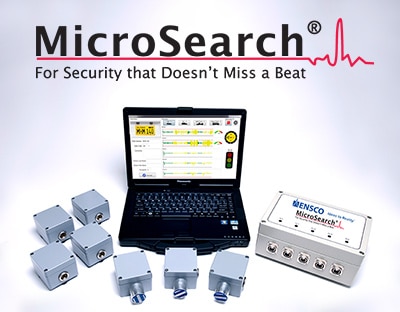
ENSCO MicroSearch G4.0. MicroSearch detects people hiding in vehicles or shipping containers by analyzing the vibrations created by a human heartbeat, using sensors placed on the vehicle; a test takes from about 20 seconds to one minute. Offered in wired and wireless configurations, MicroSearch has been deployed worldwide since 2001 at border crossings, correctional facilities, and high-value facilities. [45]
LVT mobile security units. Solar-powered LVT trailers with pan-tilt-zoom and thermal cameras, AI detection, and active deterrence are operational within minutes and connect over cellular networks, providing perimeter awareness where no infrastructure exists. [10]
How do you optimize a mobile or temporary checkpoint?
8. Ports, Borders & Vehicle Inspection
Examples: seaports and container terminals · land ports of entry · rail border crossings · transit hubs and secure facility vehicle gates
What are the main security concerns at ports, borders, and vehicle checkpoints?
Vehicles and containers can conceal large quantities of contraband, weapons, explosives, and radioactive material — and people. Physically inspecting a loaded truck or container is slow, labor-intensive, and hazardous. Non-intrusive inspection solves this by imaging the whole vehicle. The key concerns are:
What vehicle and cargo inspection equipment does Point Security recommend?
|
Screening layer |
Recommended equipment |
Concern addressed |
|
High-energy cargo and vehicle (HCV) screening |
Smiths Detection HCVG viZual, HCVL, HCVMT XT, HCVM XL, HCVP 2 Series, and HCVT 60 |
Trucks, containers, light vehicles, and rail cars |
|
Mobile and relocatable X-ray |
Smiths Detection ScanTrailer 100100V-2is, ScanMobile 130100, and ScanVan 100100 PRO |
Baggage, parcels, and freight at temporary or changing locations |
|
Human and stowaway presence detection |
ENSCO MicroSearch G4.0 Wired or Wireless |
People hidden in vehicles and containers |
|
Low-energy vehicle X-ray (under-vehicle / portal) |
Viken Detection Osprey and Harrier |
Undercarriages and multi-view portal inspection |
|
Surveillance and deterrence |
LVT camera systems |
Lanes, lots, and perimeters |
How do these layers work together?
Smiths Detection’s HCV line covers every major vehicle inspection scenario:
Optional iCMORE Radioactivity on HCV systems detects gamma and neutron sources simultaneously with the X-ray scan. [46][52]
Relocatable X-ray. The ScanTrailer 100100V-2is brings a dual-view HI-SCAN with a 1010 × 1010 mm tunnel to loading docks and transport facilities, with no warm-up period and an optional integrated generator; the ScanMobile 130100 and ScanVan 100100 PRO provide self-propelled options. [53][44][43]
ENSCO MicroSearch G4.0. At ports and borders, MicroSearch detects stowaways and smuggled people in trucks and containers in as little as 20 seconds. [45]
Viken Detection Osprey and Harrier. The Osprey UVX provides under-vehicle X-ray inspection at fixed checkpoints, and Harrier offers two-, three-, or four-sided multiview scanning using backscatter and transmission technology for border and military checkpoints. [7]
How do you optimize a vehicle and cargo inspection checkpoint?
Why does Point Security recommend these manufacturers?
Specifying equipment is a decision about trust. Point Security’s recommended manufacturers earned that trust in aviation, defense, corrections, and border security — the most demanding screening environments in the world. Point Security is an authorized dealer for Smiths Detection and CEIA.
|
Manufacturer |
Role at the checkpoint |
Recommended for |
|
Smiths Detection |
X-ray, CT, trace, chemical, biological, and high-energy cargo and vehicle screening; iCMORE AI |
Belongings, mail, cargo, and vehicle screening across all eight categories |
|
CEIA |
Walk-through, open-gate, handheld, ferromagnetic, and mail detection; JANUS scanner |
People screening, alarm resolution, phone detection, and mail scanning |
|
Viken Detection |
Handheld X-ray, narcotics analysis, and vehicle X-ray |
Suspicious-item inspection, contraband searches, and vehicle screening |
|
LINEV Systems |
Low-dose transmission X-ray body scanners |
Internal concealment in corrections |
|
Rohde & Schwarz |
Millimeter-wave and ultrawideband body scanners |
Non-metallic threat detection at high-security sites |
|
Liberty Defense |
HEXWAVE millimeter-wave walkthrough screening |
High-throughput detection of metallic and non-metallic threats |
|
NeuralGuard |
EyeFox AI weapons detection for X-ray |
Adding AI to new and installed X-ray fleets |
|
ENSCO |
MicroSearch human presence detection |
Vehicle sallyports, borders, ports, and temporary sites |
|
Ranger Security Detectors |
B.O.S.S. body orifice scanning chair |
Body-cavity metal detection in corrections |
|
Thermo Scientific |
RadEye G20-10 X-ray and gamma survey meter |
Radiological screening at high-security sites |
|
LiveView Technologies (LVT) |
AI-enabled camera systems and mobile security units |
Deterrence and situational awareness |
Together, these manufacturers let Point Security specify every layer of a checkpoint from proven platforms — and match each layer to the facility rather than forcing the facility to fit a single product line.
How does Point Security support a checkpoint over time?
Detection performance in the real world depends as much on procedure and upkeep as on hardware. The best checkpoints rely on simple, documented procedures that reduce variability between shifts — covering operator workflow, alarm resolution, image interpretation, and calm management of the public.
Point Security supports the full lifecycle of a checkpoint:
This is the practical difference: proven detection platforms, selected layer by layer for each facility, backed by the field service that keeps both security outcomes and daily operations on track. [54]
Frequently Asked Questions
What are the layers of a security checkpoint?
A modern checkpoint can include up to seven layers: deterrence and surveillance, primary people screening, belongings screening, AI-assisted image analysis, secondary screening, targeted inspection, and vehicle and cargo inspection. Point Security selects the layers that match each facility’s threat profile rather than installing every layer everywhere.
How do you increase checkpoint throughput without reducing detection?
Reduce the events that stop the line. High-discrimination, multi-zone metal detectors cut nuisance alarms; OPENGATE lets people keep their bags; dual-view X-ray reduces rescans; CT keeps laptops and liquids in bags; AI speeds image review; and walk-through body scanners such as the QPS Walk2000 screen people at a normal walking pace.
What is the best weapons detection system for schools?
For K-12 schools, Point Security most often recommends CEIA OPENGATE for primary screening because students can walk through carrying backpacks, it produces near-zero nuisance alarms, and it sets up in under a minute. A compact X-ray such as the Smiths Detection HI-SCAN 5030C or SDX 6040 handles bags that need a closer look, and CEIA handheld detectors resolve alarms discreetly.
How do correctional facilities detect contraband cell phones?
Correctional facilities use ferromagnetic detection such as the CEIA MSD, a passive detector that finds cell phones and other ferrous contraband concealed on the body or in body cavities. It is often paired with a high-sensitivity walk-through metal detector such as the CEIA SMD601 Plus for weapons.
How can a jail detect drugs or contraband hidden inside the body?
Transmission X-ray body scanners such as LINEV Systems CLEARPASS and SENTINUS reveal internally concealed and ingested contraband with an ultra-low radiation dose. The Ranger Security Detectors B.O.S.S. chair detects metal objects in body cavities, and narcotics analyzers such as the Viken Detection FOXHOUND and Smiths Detection IONSCAN 600 identify drugs from trace residues.
What is the difference between a metal detector and a body scanner?
A metal detector senses metal only. A body scanner — millimeter-wave, ultrawideband radio, or transmission X-ray — can also detect non-metallic threats such as ceramics, plastics, liquids, and powders, and transmission X-ray can reveal items concealed inside the body.
Can AI weapons detection be added to an existing X-ray machine?
Yes. NeuralGuard EyeFox is designed to retrofit existing X-ray equipment from multiple manufacturers without new hardware, and Smiths Detection iCMORE Weapons installs as a software upgrade on most Smiths Detection X-ray systems.
What equipment is needed to screen mail for threats?
A complete mailroom typically combines X-ray (such as the Smiths Detection HI-SCAN 7555 DV or SDX 100100), a mail scanner for IED components (CEIA EMIS-MAIL), biological detection (Smiths Detection BioFlash or the BioFlash MailGuard System), trace detection for explosives and narcotics (IONSCAN 600), and handheld X-ray for suspicious items.
What X-ray equipment is required for air cargo screening?
In the United States, air cargo screening equipment should appear on TSA’s Air Cargo Screening Technology List (ACSTL). Smiths Detection’s HI-SCAN 180180-2is pro and SDX 100100 DV HC X-ray systems and the IONSCAN 600 trace detector have been listed on the ACSTL; operators should confirm current status before purchase.
Can security screening equipment be rented for events?
Yes. Point Security offers rental options for temporary needs and surge events, including portable people screening such as CEIA OPENGATE, mobile X-ray, and LVT mobile surveillance units.
How are trucks and shipping containers scanned at ports and borders?
Ports and borders use high-energy X-ray systems such as Smiths Detection’s HCV gantries, mobile scanners, drive-through portals, and rail systems to image entire vehicles and containers, supported by ENSCO MicroSearch human presence detection and Viken Detection under-vehicle and multiview X-ray.
What is human presence detection?
Human presence detection finds people hiding in vehicles or containers. ENSCO MicroSearch does this by placing sensors on the vehicle and analyzing the vibrations created by a human heartbeat, returning a result in about 20 seconds to one minute.
Are body scanners safe?
Millimeter-wave and ultrawideband scanners such as the Rohde & Schwarz QPS201 and QPS Walk2000 use non-ionizing, very low-power radio waves. Transmission X-ray body scanners used in corrections, such as LINEV Systems CLEARPASS, are ultra-low-dose systems designed to comply with the ANSI/HPS N43.17 radiation safety standard.
What types of facilities does Point Security serve?
Point Security serves federal, state, and local government and law enforcement; courthouses; correctional facilities; transportation providers; schools and colleges; healthcare; critical infrastructure; and corporate and event clients across the United States and internationally.
About the Author
Shaun Ripani is Vice President of Business Development & Strategy at Point Security, Inc. He brings extensive sales and business-development leadership in the security and threat-detection industry, including a tenure at Smiths Detection, where he led significant growth in the U.S. Department of Defense market for threat-detection systems and worked alongside the DoD on international missions to expand the global reach of screening technology. That manufacturer-side experience gives him direct, hands-on familiarity with the detection platforms — including Smiths Detection X-ray, trace, and cargo systems — that Point Security deploys across government, corrections, critical infrastructure, and transportation facilities today.
About Point Security
Point Security, Inc. is a certified small business with a proven track record spanning roughly three decades in the sale, rental, and service of checkpoint security equipment. Founded by the Holland family in Lexington, North Carolina, the company supports clients across the United States and internationally, with a reputation built on responsive service. Point Security is an authorized dealer and service provider for leading screening manufacturers, including Smiths Detection and CEIA, and integrates technology from Viken Detection, LINEV Systems, Rohde & Schwarz, Liberty Defense, NeuralGuard, ENSCO, Ranger Security Detectors, Thermo Scientific, and LVT to serve government, courts, corrections, transportation, education, healthcare, critical infrastructure, corporate, and event clients. [54]
References
 Human Presence Detection Systems Explained