An explosives trace detector (ETD) is a security screening device designed to identify microscopic residues of explosive materials. These systems are commonly used at airports, government buildings, military installations, border crossings, and other high-security facilities where detecting potential threats is essential.
Unlike conventional X-ray scanners, which create images of objects inside luggage or packages, explosives trace detectors analyze chemical residues that may indicate contact with explosive substances. Even tiny amounts of residue, invisible to the human eye, can potentially be detected.
Understanding how explosives trace detectors work can help security professionals choose the right equipment and improve screening procedures at their facilities.
How Does an Explosives Trace Detector Work?
Most explosives trace detectors operate by collecting and analyzing small samples from surfaces such as luggage, packages, clothing, or personal belongings.
During a typical screening procedure, a security officer uses a specialized swab to collect trace particles from an item. The swab is then inserted into the detector, where the sample undergoes chemical analysis.
Many modern systems use Ion Mobility Spectrometry (IMS), a technology that separates and identifies ionized molecules based on how they move through an electric field. The detector compares the resulting measurements against known chemical signatures associated with explosive substances.
If a matching substance is detected above the system’s alarm threshold, the equipment alerts the operator so additional security procedures can be performed.
This process can take only a few seconds, depending on the equipment, making explosives trace detection particularly useful in environments where screening efficiency is important.
What Can Explosives Trace Detectors Detect?
Explosives trace detection equipment is designed to identify extremely small quantities of chemical compounds associated with explosive materials.
Depending on the system’s detection capabilities, these may include residues associated with commercial, military, and certain improvised explosives.
Some advanced trace detectors can also identify narcotics and other prohibited chemical substances. This makes them valuable for facilities requiring more comprehensive screening capabilities.
However, it is important to understand that detecting explosive residue does not necessarily mean an explosive device is present. A positive alarm indicates that a targeted substance may have been detected and requires further investigation.
Explosives Trace Detection vs. X-Ray Screening
Although both technologies play important roles in security screening, explosives trace detectors and X-ray machines perform different functions.
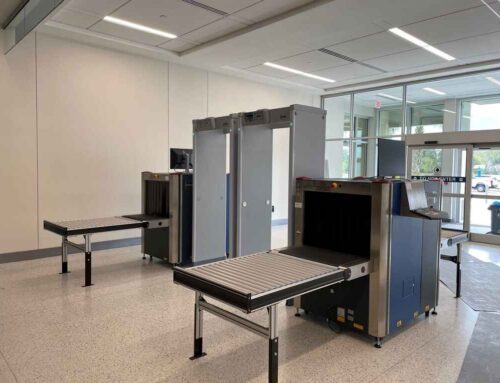
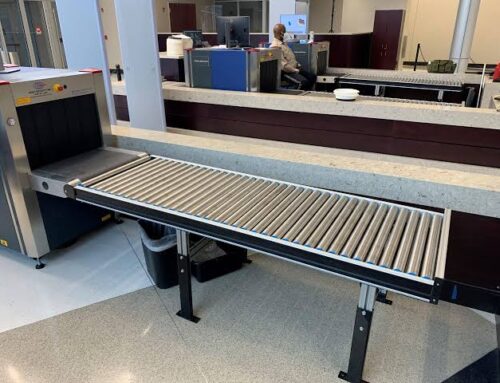
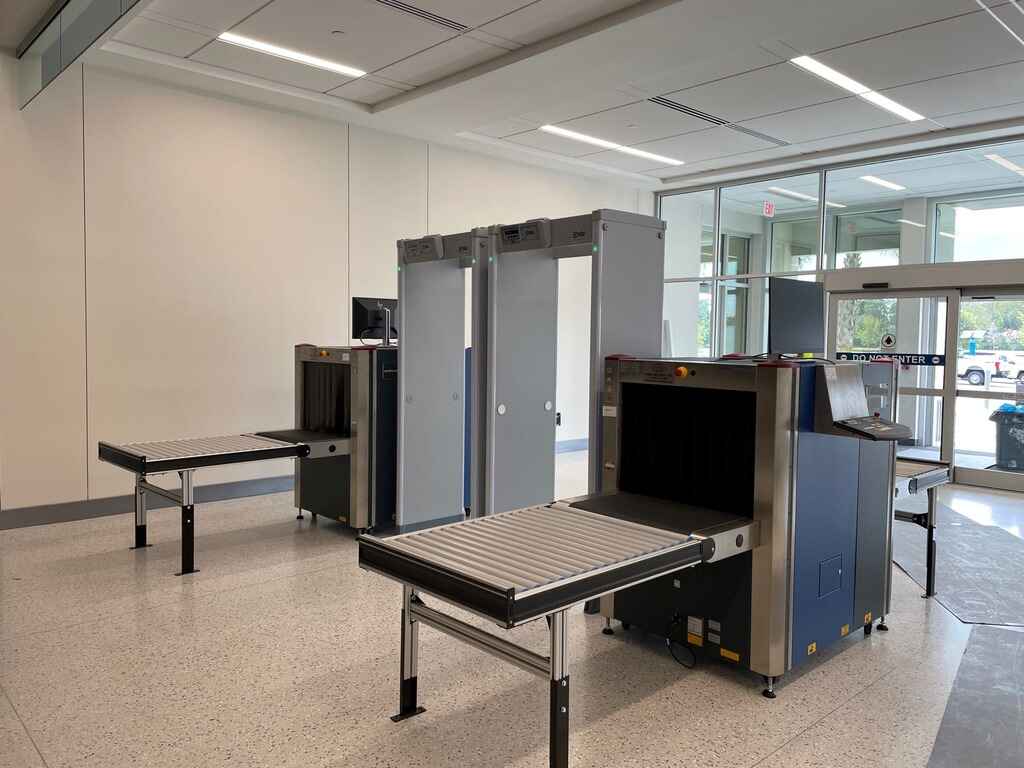
X-ray baggage scanners create images of items inside bags, packages, and containers. Security operators examine these images to identify weapons, suspicious components, and potentially dangerous objects.
Explosives trace detectors, on the other hand, analyze collected samples for chemical residues associated with explosive substances. They provide chemical detection capabilities that conventional X-ray imaging does not offer.
Metal detectors serve another purpose by identifying metallic objects, including potential weapons.
For facilities requiring comprehensive threat detection, these technologies can complement one another. Combining X-ray inspection, metal detection, and explosives trace detection allows security personnel to evaluate different types of potential threats.
Where Are Explosives Trace Detectors Used?
Explosives trace detection systems are used across several industries where security screening and threat identification are priorities.
Common applications include:
- Airports and transportation hubs: Screening passengers’ belongings, luggage, and cargo for explosive residues.
- Government and military facilities: Supporting security inspections at controlled entrances and restricted areas.
- Border crossings and ports: Inspecting vehicles, shipments, and personal belongings for suspicious chemical traces.
- Correctional facilities: Supporting contraband detection programs, particularly with systems capable of identifying both explosives and narcotics.
Portable explosives trace detectors are also useful for law enforcement agencies, emergency response teams, and specialized security personnel who require chemical screening capabilities outside permanent checkpoints.
Choosing the Right Explosives Trace Detection Equipment
Selecting an explosives trace detector requires more than comparing detection sensitivity. Facilities should consider how the equipment will be used, the number of samples processed daily, and the types of substances that need to be identified.
Several factors are particularly important when evaluating explosives detection equipment:
Detection capabilities: Different systems support different chemical libraries. Some specialize in explosives, while others can detect both explosives and narcotics.
Screening speed: Rapid analysis is particularly important at busy checkpoints where delays can affect daily operations.
Portability: Handheld and lightweight systems provide flexibility for mobile inspections, while desktop units are well suited for established screening stations.
Ease of operation: Clear interfaces, automated functions, and straightforward maintenance requirements can help reduce operator workload.
Routine performance checks, appropriate sampling procedures, and operator training are also essential for maintaining reliable detection performance.
Explosives Trace Detection Equipment from Point Security Inc
At Point Security Inc, we provide professional explosives trace detection equipment for organizations requiring reliable chemical screening capabilities.
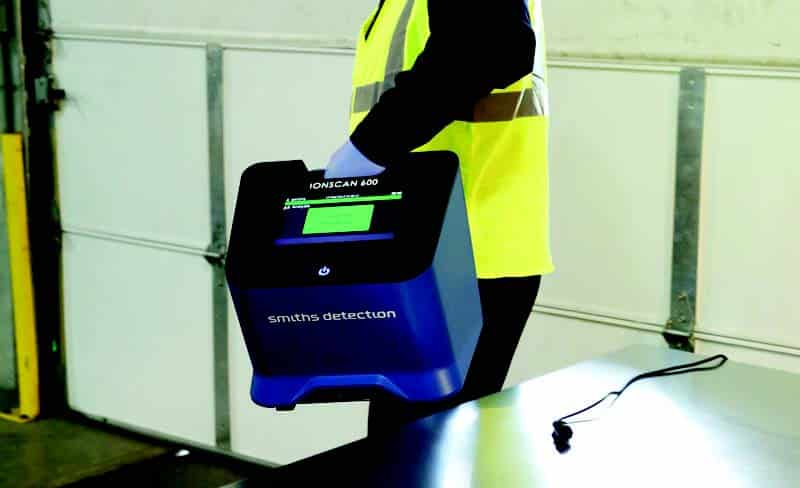
Our product lineup includes the Smiths Detection IONSCAN 600, a compact desktop system that uses non-radioactive Ion Mobility Spectrometry technology. The IONSCAN 600 can detect trace amounts of explosives and narcotics and is designed for efficient operation in demanding security environments.
We also offer the LCD 4 XID, a portable detection solution that combines the LCD 4 chemical detector with an extension for analyzing trace residues of explosives, narcotics, and other chemical threats.
Whether your organization needs explosives detection equipment for an airport, government facility, correctional institution, or specialized security operation, our team can help you evaluate available technologies and select equipment suited to your requirements.
Contact Point Security Inc to learn more about our explosives trace detectors and find the right security screening solution for your facility.
 Single-View vs. Dual-View X-Ray Scanners