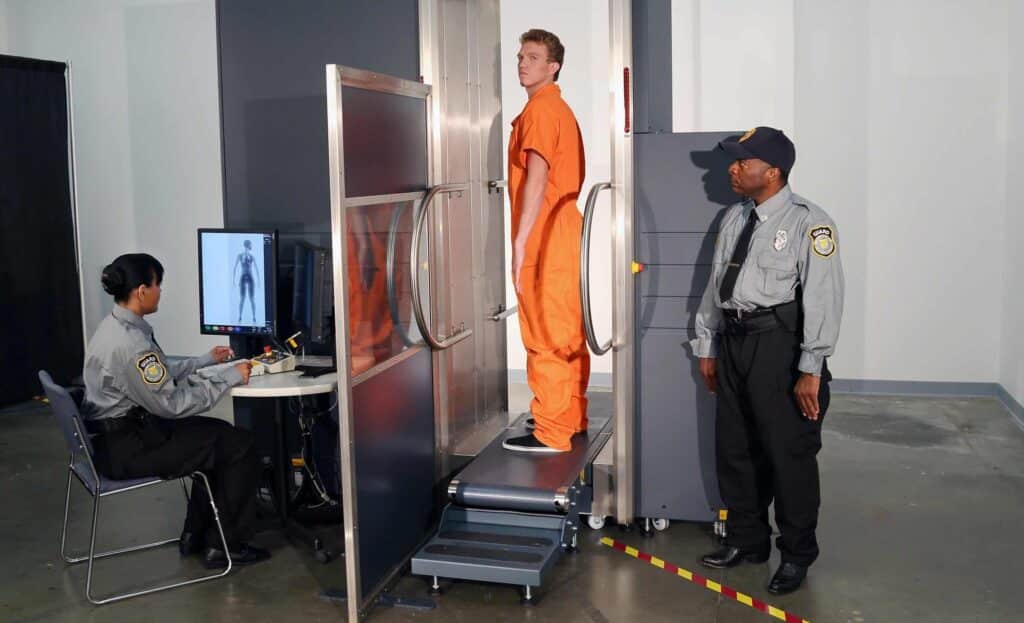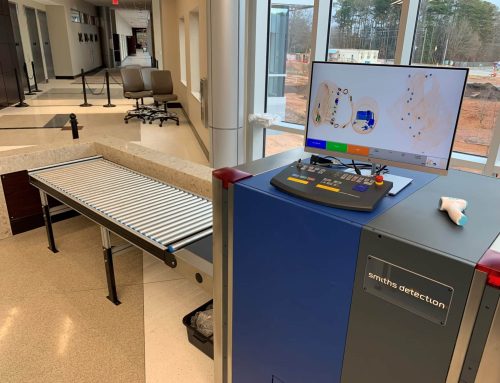

Metal detectors are essential tools used in a wide range of settings: from securing airports, courthouses, and correctional facilities to scanning bags at public events. While many people are familiar with their purpose, few understand the science behind how they work. That being said, knowing how a metal detector works can help facility managers, security personnel, and institutional buyers choose the right equipment and deploy it more effectively.
The History of Metal Detecting Technology
The earliest versions of metal detectors date back to the late 19th century. Initially used for industrial and military applications, they evolved significantly during the 20th century to support modern security operations. Today’s machines are more compact, sensitive, and reliable, using sophisticated technology to detect metallic threats in high-traffic environments.
How Do Metal Detectors Work?
At their core, all metal detectors operate using electromagnetic fields. A standard security metal detector emits a magnetic field using a coil or set of coils. When a metallic object enters this field, it disturbs the magnetic flow and creates a signal that is detected by the system. This process is known as electromagnetic induction.
The detector processes this signal and triggers an alert, that’s usually a visual or audible alarm, if the metal exceeds a pre-set threshold. Most modern detectors allow adjustable sensitivity to minimize false alarms caused by small or non-threatening objects like belt buckles or keys.
Components of a Metal Detector
Most security metal detectors, especially walk-through units, include the following core components:
- Transmitter coil that generates the electromagnetic field
- Receiver coil that detects changes in the field
- Control unit that processes signals and triggers alerts
- User interface for configuration and monitoring
How Does a Walk-Through Metal Detector Work?
Walk-through metal detectors are commonly used in airports, courthouses, and correctional facilities. These devices use multiple detection zones to pinpoint the location of a metallic object on a person’s body. When someone walks through the unit, the system rapidly scans their body from head to toe, identifying any disruption caused by concealed metal.
Advanced models can differentiate between threat-level items (such as weapons) and benign objects (like coins or keys), making the screening process more efficient and reducing the need for manual inspections.
Types of Metal Detectors
There are several types of metal detectors, each with specific use cases:
Walk-through metal detectors: Stationary, multi-zone systems ideal for high-traffic security screening
Handheld metal detectors: Portable wands used for secondary screening or low-traffic environments
Induction balance detectors: Common in both hobbyist and professional-grade equipment, known for their accuracy in object differentiation
Choosing the right type depends on the location, traffic volume, and the level of threat your facility needs to manage.
Applications in Security and Beyond
In security, metal detectors are used to prevent weapons and contraband from entering restricted areas. They are standard equipment in airports, stadiums, courthouses, jails, and event venues.
Outside of security, metal detectors are also used in archaeology, mining, construction, and even food processing, where they help detect metal fragments in packaged goods.
The Future of Metal Detection
As technology advances, metal detectors continue to evolve. Features like automatic threat recognition, integration with access control systems, and real-time data reporting are becoming standard in high-end models. These innovations improve not only the accuracy of detection but also the efficiency and scalability of security operations.
At Point Security Inc, we provide advanced metal detection solutions built for demanding security environments. Whether you’re securing a government building, event venue, or correctional facility, understanding how metal detectors work is the first step in building a safer operation.