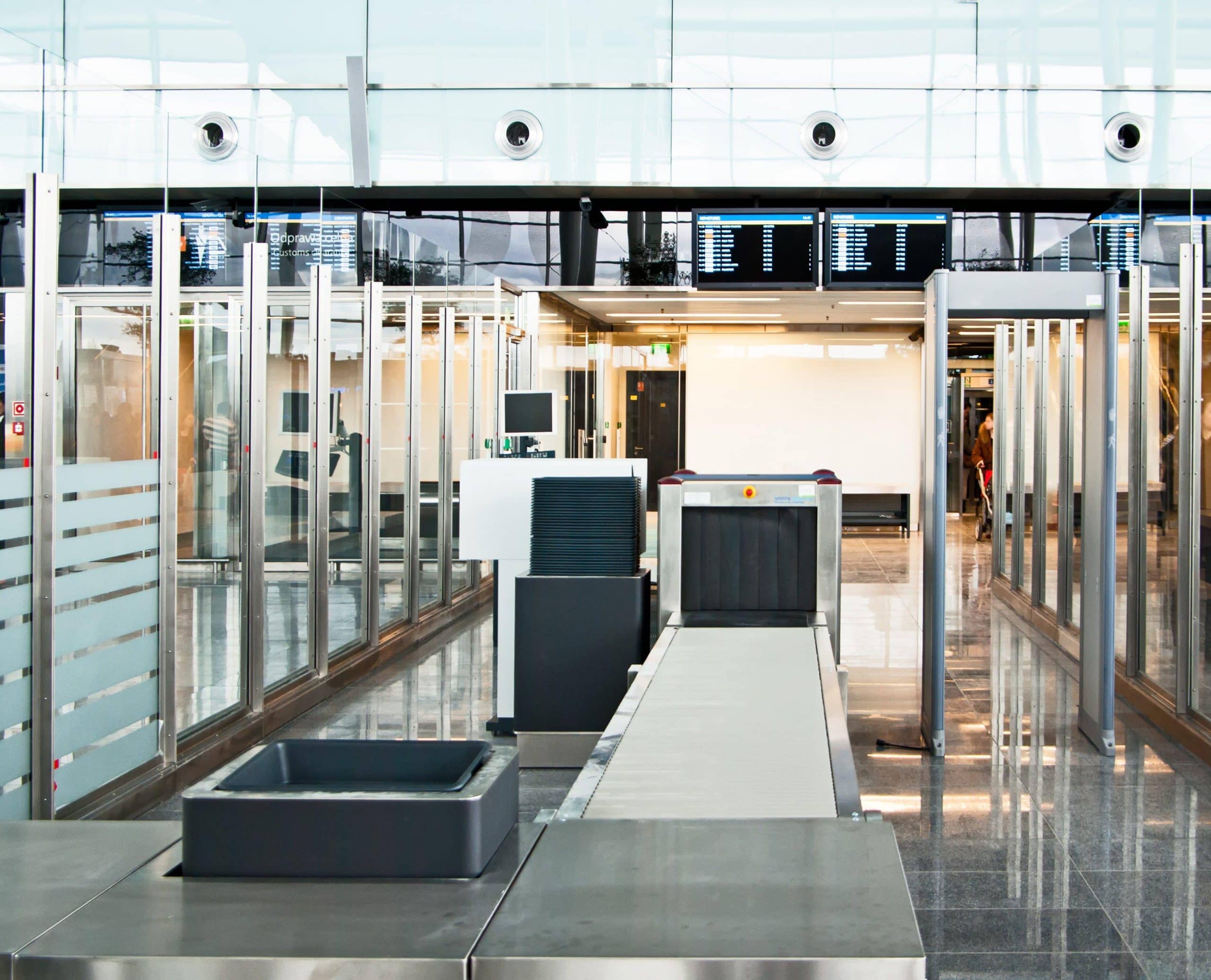
If you are building a security checkpoint, the question is not “which is better?” It is “which tool matches the threat and the workflow?”
Metal detectors are built for fast screening and reliable detection of metallic objects. Millimeter wave scanners are built to detect a wider range of concealed items on a person, including many non-metallic threats, while keeping the process contactless.
How walk-through metal detectors work in security screening
Walk-through metal detectors create an electromagnetic field inside the archway. When a person passes through with metal on their body, that field changes and the detector triggers an alarm based on sensitivity settings.
For high-traffic entrances, walk-through units are popular because they support continuous flow. Multi-zone models can help narrow down where the metal is located on the body, which speeds up alarm resolution and reduces unnecessary rescreens.
Where handheld metal detectors fit
Handheld metal detectors are not a replacement for a walk-through lane. They are a secondary tool that helps resolve alarms quickly.
In practice, handheld screening is used to pinpoint the source of an alarm, confirm whether the item is harmless, and keep the line moving. They are also useful at staff entrances, VIP access points, and smaller checkpoints where a full lane is not practical.
How millimeter wave scanners work
Millimeter wave scanners use low-energy radio waves to detect anomalies on a person’s body. Instead of only responding to metal, they can flag a broader range of concealed items under clothing, depending on the system and configuration.
In most deployments, the scanner highlights an area of concern for the operator to resolve. The key operational advantage is that the screening can remain non-contact while detecting threats that metal detectors may not reliably catch.
What millimeter wave scanners detect that metal detectors can miss
Metal detectors are excellent at detecting metallic threats. The limitation is straightforward: if the threat is not metal, detection is less reliable.
Millimeter wave scanners are often used to improve detection of:
- Non-metallic weapons or components
- Items concealed under clothing that do not present as strong metal signatures
- Anomalies that warrant secondary screening even when metal detection is quiet
That does not mean millimeter wave replaces metal detection in every environment. It means it can add capability where the threat profile requires it.
Throughput and staffing
Throughput depends as much on process as on technology.
Walk-through metal detectors typically support very high throughput when the rules are simple and consistent. You screen, alarm, resolve with a handheld unit, and move on.
Millimeter wave scanners can be extremely efficient, but you need a clear resolution workflow. If every alert turns into a long stop, the checkpoint slows down. The best results come when the site has defined policies, trained operators, and a designated resolution area that does not block the primary flow.
A common high-performance approach is layered screening:
- Walk-through metal detection for primary screening
- Handheld metal detection for fast alarm resolution
- Millimeter wave screening for higher-risk entries or when non-metal threats are a priority
Privacy and comfort considerations
Modern screening programs have to balance security with public acceptance. Metal detectors are familiar and generally well tolerated. Millimeter wave scanners are also designed for contactless screening and are widely deployed in security environments, but the facility should still plan for privacy expectations, signage, and operator professionalism.
If you are deciding between technologies, it helps to evaluate how the checkpoint will feel to the public, not just what it detects.
How to choose the right option for your facility
A practical way to decide is to start with these questions:
- What threats are you most concerned about: metallic weapons only, or also non-metallic items?
- How many people do you need to screen per hour during peak flow?
- Do you need continuous flow screening, or controlled one-at-a-time screening?
- How will alarms be resolved without stopping the entire line?
- What staffing level and training time can you support?
If your primary concern is fast screening for metallic weapons at a high-traffic entrance, walk-through plus handheld screening is usually the foundation. If your risk profile requires better coverage for concealed non-metallic threats, millimeter wave scanning becomes a stronger fit.
Security screening solutions from Point Security Inc
At Point Security Inc, we help facilities choose security screening equipment based on real operational needs, including throughput, staffing, and threat profile. Our product lineup includes walk-through metal detectors, handheld metal detectors, and millimeter wave scanners used for advanced people screening.