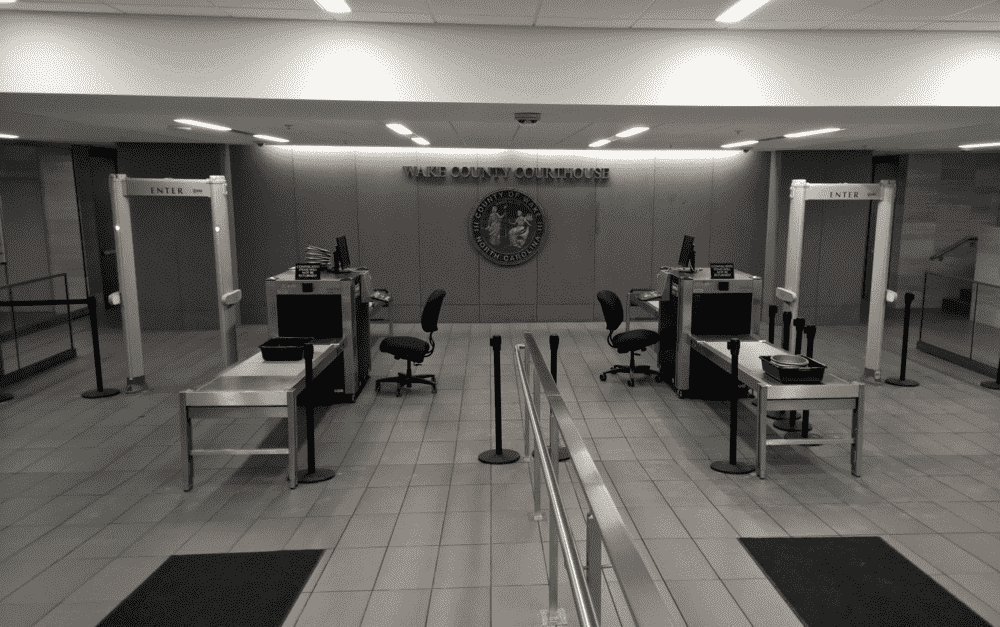
Courthouses are uniquely sensitive environments. You have high daily foot traffic, emotionally charged proceedings, and a mix of visitors, attorneys, staff, and law enforcement moving through the same entrances. That combination makes courthouse security screening both high-stakes and operationally challenging. The goal is simple: detect weapons and prohibited items before they enter the building, while keeping lines moving so court schedules stay on track.
A well-designed checkpoint relies on layered screening, clear procedures, and equipment built for consistent performance.
Courthouse Security Screening Equipment
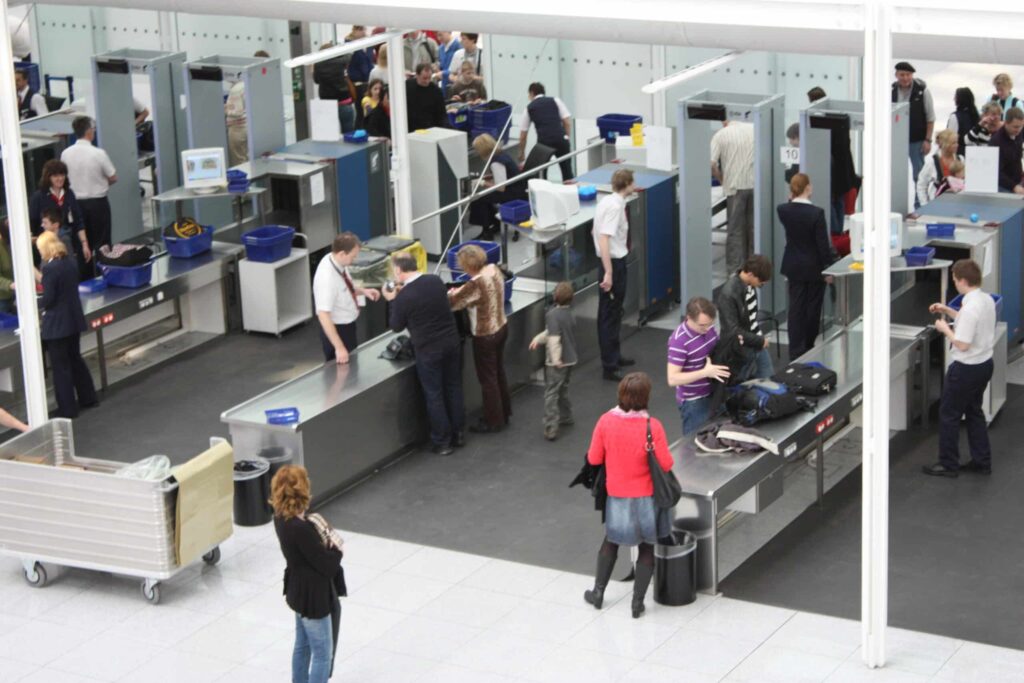
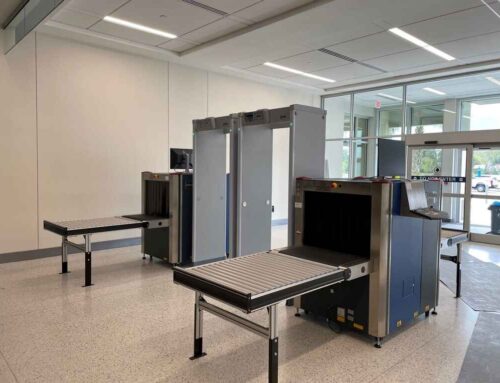
Most courthouse checkpoints use a layered approach that covers both people and belongings. The most common foundation includes walk-through metal detectors, an x-ray baggage scanner, and handheld metal detectors for secondary screening.
This structure supports fast primary screening, targeted resolution of alarms, and consistent bag inspection without relying on manual searches as the default.
Walk-Through Metal Detectors for Courthouse Entrances
Walk-through metal detectors are typically the first line of defense at public entrances. They are designed to screen a continuous flow of visitors while detecting metallic threats such as firearms, knives, and other weapons.
For courthouses, the most important considerations are throughput, alarm accuracy, and the ability to resolve alarms quickly. Multi-zone detection is especially useful because it helps security teams identify where the metal is located on the body, which speeds up secondary screening and reduces repeated walk-through attempts.
Many courthouses also care about appearance and footprint. A walk-through unit that blends into a professional environment, while still meeting security requirements, helps maintain the tone of the facility.
X-Ray Baggage Scanners for Courthouse Bag Screening
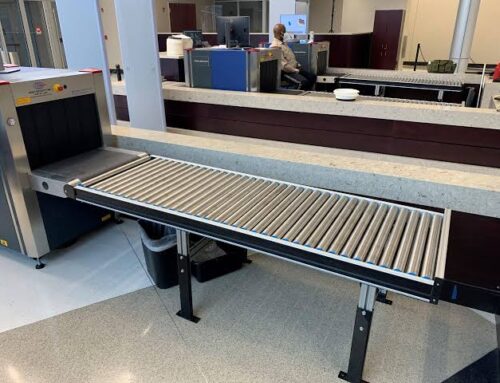
Even if your courthouse has a restrictive bag policy, you will still see purses, briefcases, backpacks, and parcels. X-ray baggage scanners allow officers to inspect contents quickly and consistently, reducing the need for manual bag checks and improving detection of prohibited items.
An x-ray system supports screening for a broad range of risks, including weapons, sharp objects, and suspicious components that may not trigger metal detectors. It also helps standardize the process so every bag is checked the same way, regardless of who is working the shift.
For many courthouses, the biggest operational win is speed. When bags move through x-ray efficiently, the entire entry process becomes more predictable, and bottlenecks become easier to manage.
Handheld Metal Detectors for Secondary Screening
Handheld metal detectors are essential for resolving alarms. When a walk-through unit alerts, a handheld detector allows the officer to quickly locate the source of the metal and determine whether it is an allowed item or something that requires escalation.
Secondary screening works best when it is fast and consistent. Handheld screening helps avoid unnecessary pat-downs and reduces repeated walk-through attempts, which can slow the line and frustrate visitors.
In courthouse settings, handheld units are also useful for staff entrances, after-hours access points, and targeted checks during high-volume periods.
Checkpoint Layout and Flow for Courthouse Entry Lines
Good equipment can still fail operationally if the layout is poor. Courthouse screening should be designed around flow, not just placement.
A practical courthouse checkpoint typically includes:
- A preparation zone where visitors can remove metal items, place bags on the belt, and receive instructions
- Clearly separated lanes for visitors and for staff or credentialed entry (when applicable)
- A resolution area off to the side where secondary screening can occur without blocking the main line
This layout reduces congestion, improves compliance, and helps officers maintain control of the screening area.
Reducing False Alarms Without Reducing Security
False alarms slow the line and create friction, but lowering sensitivity too far creates risk. The better approach is to reduce nuisance alarms through setup, settings, and procedures.
Common ways courthouses reduce delays while maintaining detection standards:
- Use consistent sensitivity profiles based on the threat level and typical visitor traffic
- Standardize what visitors must remove (for example, keys, belts, or large metal objects)
- Keep the screening environment stable by avoiding unnecessary metal clutter near the detectors
- Train staff on quick and consistent alarm resolution using handheld screening
When everyone follows the same playbook, throughput improves and detection remains strong.
Training and Procedures for Consistent Courthouse Screening
Courthouse screening is not only about technology. It is about repeatable decision-making. The best checkpoints rely on simple, documented procedures that reduce variability between shifts.
Training should cover operator workflow, alarm resolution, x-ray image interpretation basics, and how to manage the public calmly and professionally. Consistency protects both security outcomes and the courthouse’s day-to-day operations.
Courthouse Screening Solutions from Point Security Inc
At Point Security Inc, we support courthouse security screening with professional equipment built for high-traffic public facilities. Our lineup includes walk-through metal detectors such as the SMD600 Plus and CEIA PMD2 Plus, handheld metal detectors like the CEIA PD240CB, and x-ray baggage scanning systems like the HI-SCAN 6040C for bag and parcel inspection.
We help courthouses build checkpoints that prioritize safety, throughput, and a controlled visitor experience. Whether you are upgrading an older screening area or designing a new entry process, we can recommend the right combination of screening equipment and workflow to match your building, staffing model, and daily traffic.