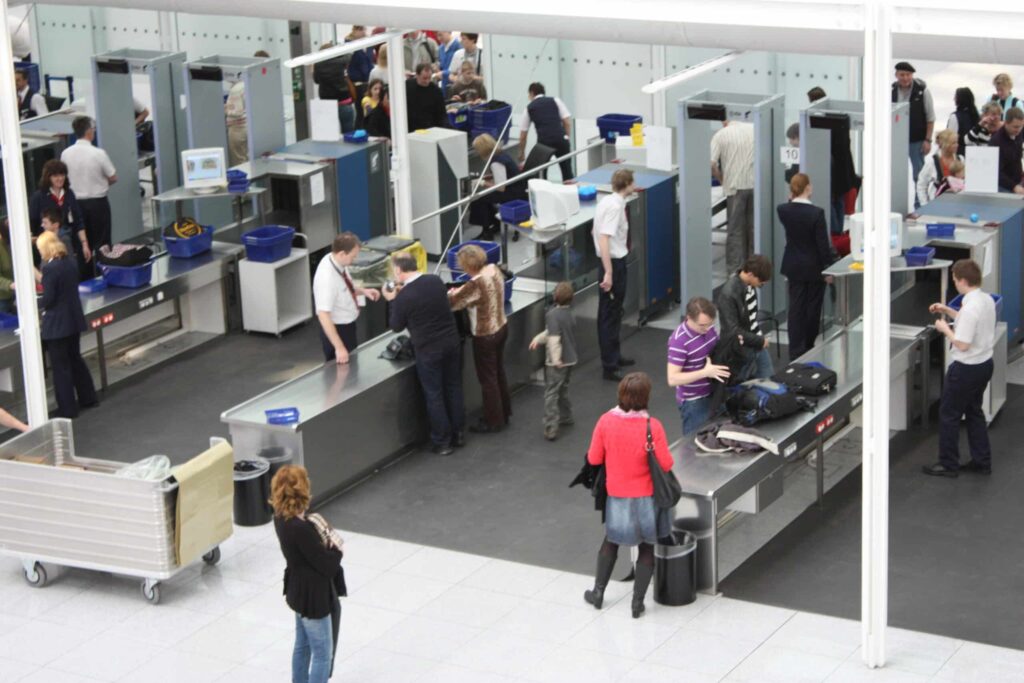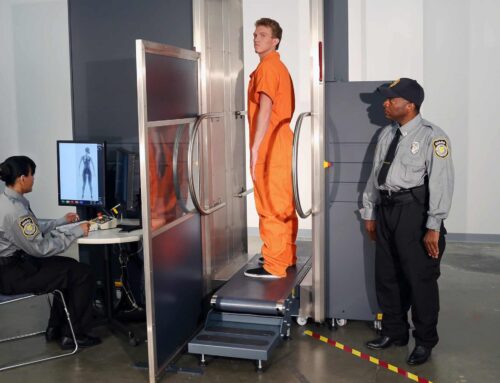
Security x-ray machines are a critical part of modern screening systems used in airports, courthouses, correctional facilities, government buildings, and public venues. These machines provide fast, non-invasive inspection of bags, parcels, and personal belongings, helping security personnel identify prohibited, dangerous, or illegal items before they enter secure areas.
But what exactly can these machines detect? Understanding their capabilities is essential for facility managers, event organizers, and anyone responsible for physical security operations.
How Security X-Ray Machines Work
X-ray baggage scanners work by projecting a low-dose x-ray beam through the contents of a bag or parcel. As the x-rays pass through different materials, they’re absorbed at different rates depending on an object’s density and composition. The system’s detectors capture the signals and software processes them into a detailed image that is displayed to the operator.
Many systems use color-coded imaging to help operators distinguish between material types. In a common scheme, organic materials (such as food, paper, or clothing) may appear in orange, while metals and other dense, inorganic objects may appear in green or blue. Very dense items or potential shielding can show up as dark gray or black, depending on the system and settings.
Operators are trained to interpret these images and flag suspicious items for further inspection.
Common Items Detected by X-Ray Machines
Security x-ray machines are highly effective at detecting a wide range of threats and prohibited items, including:
Weapons and Sharp Objects
- Firearms and gun components
- Knives, scissors, and blades
- Improvised weapons or tools
Explosives and Hazardous Materials
- Solid, liquid, or powder explosives
- Detonators, batteries, and wires
- Pressurized containers or flammable materials
Contraband and Illegal Substances
- Narcotics concealed in personal items or clothing
- Smuggled goods such as unauthorized electronics or currency
Electronic Devices
- Phones, tablets, laptops, USB drives
- Hidden cameras or unauthorized communication tools
While x-ray machines can’t confirm the chemical composition of drugs or explosives, they can alert operators to suspicious shapes and densities that warrant secondary screening.
What X-Ray Machines Cannot Detect
Despite their capabilities, x-ray scanners do have limitations. For example, they generally cannot reliably detect low-density materials such as liquids inside bottles unless the system has been specifically trained to recognize that container shape and presentation. They also cannot identify biological substances, gases, or radioactive materials, since those require different detection methods. In addition, certain types of shielding can obscure what’s inside, unless you’re using dual-view systems or more advanced detection models designed to reduce blind spots.
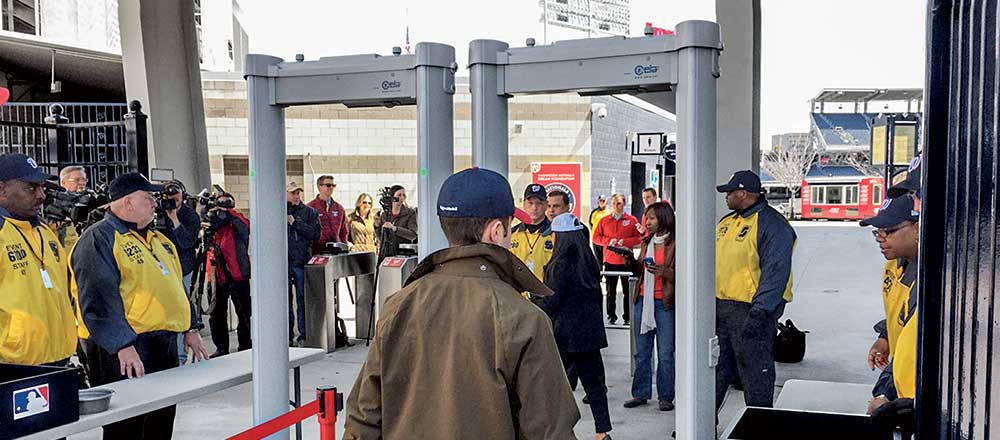
Because of these gaps, x-ray machines are commonly used as part of a layered screening setup alongside metal detectors, body scanners, or chemical trace detection equipment for broader coverage.
Professional Screening Equipment from Point Security Inc
At Point Security Inc, we provide advanced x-ray scanning systems built for high-traffic screening environments. Our equipment supports security teams across multiple sectors, helping identify threats quickly, reliably, and safely. Whether you’re securing a courthouse, correctional facility, or special event, our x-ray scanners are calibrated to detect what matters most.
From compact, single-view models to high-capacity dual-view systems, we offer a range of configurations tailored to your operational needs. If you’re planning to upgrade your screening process or implement a new security checkpoint, our team can help you choose the right solution.